
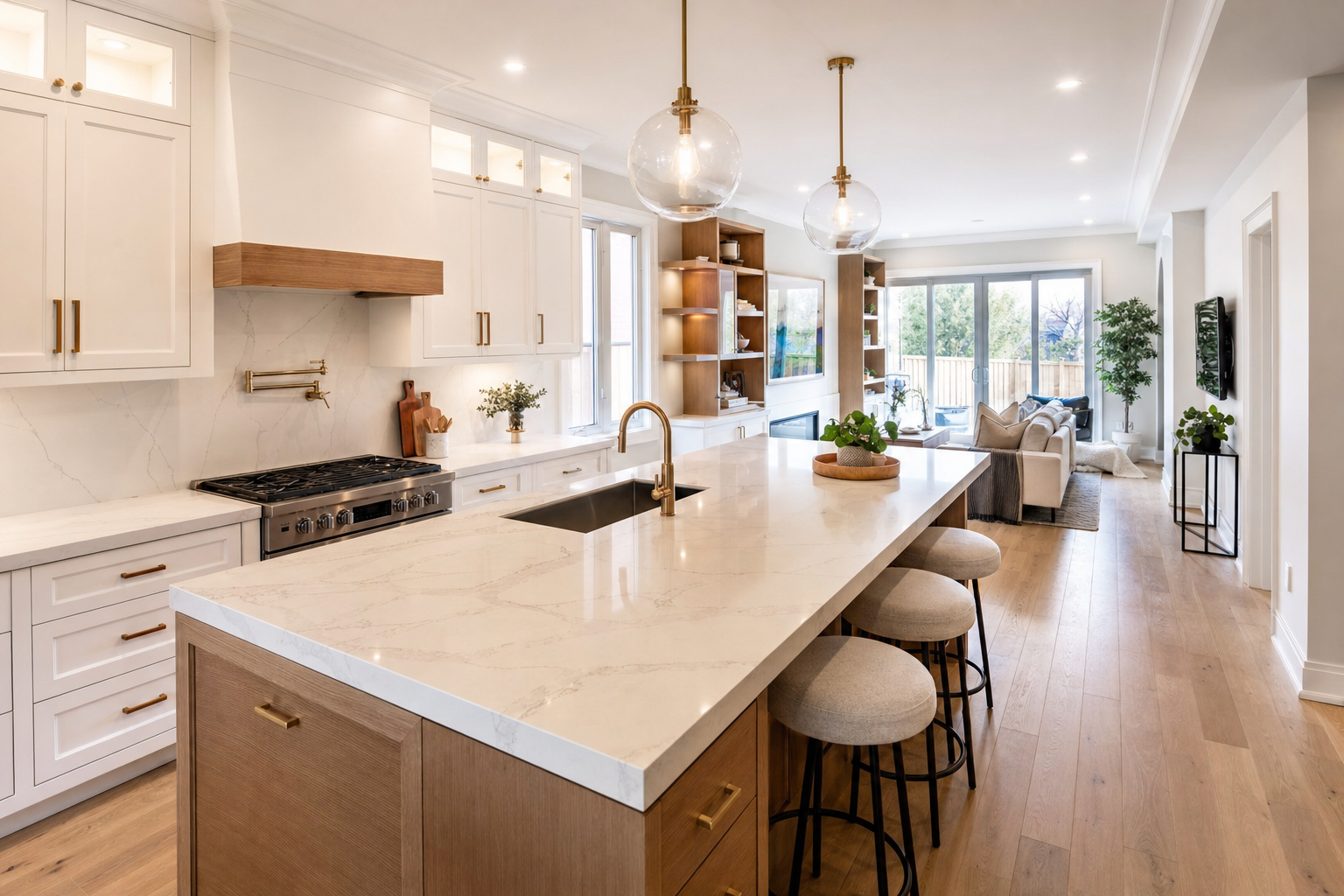
Do you need a permit to renovate your house? The answer depends on the scope of your project. In Ontario, most renovations involving structural changes, electrical work, plumbing modifications, or additions require a building permit. Cosmetic updates like painting, flooring, or cabinet replacement typically don’t. This guide explains exactly which renovations require permits across the Greater Toronto Area, how to obtain them, and how requirements vary from Toronto to Vaughan.
Understanding building permit requirements protects you from fines, insurance claim denials, and complications when selling your home. It also ensures your renovation meets Ontario Building Code standards for safety and structural integrity.
Quick Answer
Yes, you need a permit for renovations involving structural changes, additions, plumbing, electrical, or HVAC modifications in Ontario. Cosmetic updates like painting, flooring, or countertops don’t require permits. Requirements vary by GTA municipality.
Key Takeaways
- Verify permit requirements before starting any structural or system work
- Expect permit costs between $150-$2,000 depending on project scope
- Budget 2-6 weeks for permit approval in most GTA municipalities
- Avoid unpermitted work to prevent insurance claim denials and resale issues
- Choose licensed contractors who handle permit coordination and inspections
Why Building Permits Are Required for Home Renovations
Building permits exist to protect homeowners and future occupants. They ensure renovations meet minimum safety standards established by the Ontario Building Code.
Without permits, there’s no third-party verification that your contractor followed proper procedures. Electrical work could create fire hazards. Structural modifications might compromise your home’s integrity. Plumbing errors can lead to flooding or sewage backups.
Permits also create an official record of changes to your property. This documentation matters when you sell your home or file insurance claims. Many home insurance policies won’t cover damage related to unpermitted work.
At Reformo, Mostafa Khorsandnia coordinates all permit applications before work begins on structural projects across the GTA. His engineering license ensures that load-bearing wall modifications, beam installations, and foundation work meet Ontario Building Code requirements during the inspection process.
What Home Renovations Require a Permit in Ontario
Most GTA municipalities require permits for renovations that affect your home’s structure, safety systems, or square footage. The specific threshold varies slightly between Toronto, Mississauga, and Vaughan, but certain categories consistently trigger permit requirements.
Structural Modifications and Load-Bearing Changes
Any work involving load-bearing walls requires a permit. This includes removing walls, cutting openings for doors or pass-throughs, or installing support beams. Foundation work always needs permits. Building additions or extensions require permits regardless of size in most GTA municipalities.
When evaluating projects that involve removing walls or installing steel beams, a licensed engineer must assess whether changes meet structural requirements. Reformo’s engineering oversight ensures these modifications receive proper permits and pass inspections across Toronto, Mississauga, and surrounding areas.
Electrical, Plumbing, and HVAC System Work
Electrical work beyond simple device replacement requires permits. Adding new circuits, upgrading electrical panels, installing exterior outlets, or rewiring portions of your home all need electrical permits.
Plumbing permits apply when you add or relocate fixtures. Moving a toilet, installing a new sink, adding a bathroom, or rerouting drain lines requires permits and inspections. Gas line work always requires permits. HVAC modifications require permits when you change system capacity or add ductwork.
Common Renovation Projects That Don’t Need a Permit
Cosmetic renovations typically don’t require permits in Ontario. Painting, wallpapering, and similar surface treatments never need permits. Flooring replacement doesn’t require permits. Cabinet installation and countertop replacement are permit-exempt. Window and door replacement in existing openings typically doesn’t need permits if you’re not changing the opening size or structural framing.
| Renovation Type | Permit Required? | Key Consideration |
|---|---|---|
| Painting interior/exterior | No | Pure cosmetic work |
| Cabinet installation | No | Unless plumbing/electrical modified |
| Flooring replacement | No | Any material type allowed |
| Window replacement (same size) | Usually no | Verify with municipality |
| Trim and molding | No | Finishing details exempt |
Ready to start your renovation?
Get a free, no-obligation quote from Mostafa Khorsandnia and the Reformo team. Licensed, certified, and insured for projects across the GTA.
How to Get a Building Permit in the GTA: Step-by-Step Process
The permit application process varies slightly across GTA municipalities, but follows a general pattern. Start by determining which permits you need. Most renovation projects require a building permit, but may also need separate electrical, plumbing, or gas permits depending on the scope.
Gather required documentation. This typically includes detailed drawings showing existing conditions and proposed changes, structural calculations if you’re modifying load-bearing elements, site plans, and contractor information.
For structural modifications requiring engineering oversight, professional drawings stamped by a licensed engineer are mandatory. These drawings demonstrate that your planned changes meet Ontario Building Code load requirements.
Submit your application to the municipal building department. Toronto offers online submission through the Toronto Building portal. Mississauga, Brampton, and Vaughan each have their own submission systems. Pay permit fees, which typically range from $150-$500 for minor interior renovations to $1,500-$3,000+ for additions.
Wait for permit approval. Review times range from 2-3 weeks for straightforward renovations to 6-8 weeks for complex projects. Once approved, schedule required inspections at rough-in stage, insulation stage, and final completion.
GTA Municipality-Specific Permit Requirements
Toronto operates one of the strictest permit systems. The city requires permits for almost all structural work, additions, basement finishing projects involving new living space, and system modifications. Toronto permit fees use a tiered structure. A $30,000 kitchen renovation costs $800-$1,200 in permit fees. Processing times range from 3-4 weeks for minor permits to 8-12 weeks for complex projects.
Mississauga’s permit system is slightly more streamlined. The city offers a Homeowner Building Permit Package for common renovations. A major bathroom renovation requiring plumbing and electrical permits costs $600-$900 in fees. Processing times average 2-3 weeks for straightforward permits.
Brampton requires permits for structural changes, additions, finished basements, and major system work. Basement finishing permits run $500-$1,000. Processing times average 2-3 weeks. Vaughan maintains efficient permit processing with most residential renovation permits costing $400-$1,500 and 2-4 week processing times. Richmond Hill follows similar timelines and cost structures.
| Municipality | Processing Time | Kitchen Permit Cost | Basement Permit Cost |
|---|---|---|---|
| Toronto | 3-12 weeks | $800-$1,200 | $700-$1,400 |
| Mississauga | 2-6 weeks | $600-$900 | $600-$1,100 |
| Brampton | 2-3 weeks | $650-$950 | $500-$1,000 |
| Vaughan | 2-4 weeks | $600-$1,000 | $550-$1,200 |
| Richmond Hill | 2-4 weeks | $550-$950 | $500-$1,100 |
Ontario Building Code Compliance for Renovations
The Ontario Building Code establishes minimum construction standards across the province. Renovations must bring affected areas up to current code standards even if the rest of your home was built under older rules. This means adding a bathroom in your basement triggers current plumbing code requirements for that bathroom, even though your 1970s house has outdated plumbing elsewhere.
Structural Code Requirements
The code specifies minimum beam sizes for given spans, proper support for load-bearing walls, foundation depth requirements, and floor joist spacing. When planning projects involving load-bearing changes, structural drawings stamped by a licensed professional engineer must demonstrate code compliance. At Reformo, Mostafa Khorsandnia’s engineering credentials allow him to prepare and stamp these drawings for GTA projects, streamlining the permit process while ensuring modifications meet all structural requirements.
Electrical, Plumbing, and Energy Code Standards
Electrical code compliance requires proper wire sizing, circuit protection, grounding, and device placement. The code mandates specific receptacle spacing in kitchens, requires GFCI protection in bathrooms and outdoor locations, and sets standards for panel capacity.
Plumbing code standards govern pipe sizing, drainage slopes, venting requirements, and fixture placement. Energy code provisions affect insulation requirements, window specifications, and heating system efficiency. Hiring licensed contractors for system work ensures code compliance.
How to Check If Previous Renovations Were Permitted
Many GTA homeowners discover unpermitted work after purchasing their property. Learning how to research your home’s permit history protects you from inheriting someone else’s problems and helps you understand what documentation exists for your home.
Accessing Municipal Permit Records
Start with your municipality’s building department. Most GTA cities maintain searchable permit databases going back 20-30 years. You’ll need your property address and legal description.
Toronto provides online permit history through the Toronto Building Records portal. Search by address to view all building permits issued for your property, including permit types, issue dates, and closure status. The system shows both current and historical permits dating back to when records were digitized.
Mississauga offers similar online access through the city’s Building Division website. The system shows permit applications, approvals, and inspection records. You can view permit details and download approved drawings for recent permits. For older records, contact the building department directly to request archive searches.
Brampton maintains permit records through their Building Services division. Online searches cover recent permits, while older records may require in-person visits or written requests. Vaughan provides permit history searches through their building department portal, with similar access to recent digital records and archived paper records for older properties.
Richmond Hill residents can access permit records through the city’s building department. Contact them directly for properties with renovation histories predating digital record systems.
Identifying Unpermitted Work
Look for open permits on your property. These represent work that received permits but never passed final inspection. Open permits create problems during real estate transactions and sometimes require retroactive final inspections before you can obtain new permits.
Compare permit records against visible renovations. If your home has a finished basement, renovated kitchen, or addition, but no corresponding permits appear in municipal records, that work was likely completed without permits.
Previous owner disclosure documents may reveal renovation history. Review these documents from your home purchase for mentions of unpermitted work or renovation timelines that don’t match permit dates.
We always check historical permits for homes built before 1990 during our initial assessment. Many basement renovations from the 1980s and 1990s were completed without permits, which creates complications when homeowners plan additional work in those spaces.
What Happens If You Renovate Without a Permit
The consequences of unpermitted renovation work extend far beyond municipal fines. The risks accumulate over time and often surface at the worst possible moments.
Municipal Fines and Stop-Work Orders
If a building inspector or neighbor reports unpermitted work, you’ll receive a stop-work order and fines starting around $500-$1,000. Repeat violations or serious safety issues can trigger fines exceeding $5,000. You’ll still need to obtain permits retroactively. This means opening up finished walls so inspectors can verify electrical, plumbing, and structural work. The cost of demolishing and rebuilding finished surfaces often exceeds the original permit fees by 300-400%.
Real Estate Transaction Complications
When you sell your home, your lawyer asks about renovations and whether permits were obtained. Misrepresenting this information creates legal liability. Being honest about unpermitted work scares buyers or tanks your sale price. Some buyers walk away entirely. Others demand price reductions equal to the cost of bringing work up to code, plus a risk discount of $20,000-$50,000 or more.
Insurance Claim Denials
Home insurance policies won’t cover damage related to unpermitted work. If damage stems from or relates to unpermitted renovations, insurers typically deny the entire claim. This applies even when the unpermitted work seems unrelated to the damage cause.
Safety and Liability Risks
Unpermitted work may not meet building code standards, creating safety hazards. Improperly sized beams can fail under load. Faulty electrical work causes fires. Inadequate plumbing venting leads to dangerous sewer gas buildup. If someone gets injured due to code violations in unpermitted work, you face personal liability that insurance won’t cover.
Insurance Implications of Unpermitted Work
Home insurance and unpermitted renovations create a dangerous combination that most homeowners don’t understand until they file a claim. The financial consequences can be devastating.
Coverage Exclusions and Claim Denials
Insurance policies require you to disclose material changes to your property. Finished basements, additions, and major renovations all qualify as material changes. Failing to update your policy after these changes can void coverage.
Unpermitted work specifically creates coverage exclusions. If damage stems from or relates to unpermitted work, insurers typically deny the entire claim. A real example illustrates the risk: a homeowner’s kitchen fire started from an electrical short. The insurance adjuster discovered the kitchen had been renovated without permits five years earlier. The insurer denied the $180,000 claim, arguing the unpermitted electrical work caused the fire. The homeowner faced total financial loss because they saved $800 in permit fees.
Policy Disclosure Requirements
Disclosure obligations apply when you know about unpermitted work. If you purchased a home with existing unpermitted renovations, you must inform your insurer when you discover the issue. Failing to disclose creates material misrepresentation grounds for claim denial.
Insurance companies investigate renovation history during major claims. They request permit records from municipalities and compare them against the work visible in your home. Discrepancies trigger detailed investigations that often result in coverage denials.
Some insurers refuse to write new policies for homes with known unpermitted work until that work is either removed or brought up to code with proper permits and inspections. This creates problems when switching insurance companies or when your current insurer non-renews your policy.
Premium Increases and Underwriting Issues
Even when insurers don’t deny coverage completely, unpermitted work affects your premiums. Homes with unpermitted renovations are rated as higher risk, resulting in 15-30% premium increases. The increased cost accumulates over years of ownership, far exceeding the original permit fees you tried to avoid.
Basement apartments create particularly severe insurance problems. Most insurers won’t cover rental units in your home without proper permits and separate electrical meters. Operating an unpermitted basement apartment violates most insurance policies and gives insurers grounds to cancel your coverage entirely.
Frequently Asked Questions
Do I need a permit to renovate my kitchen in Ontario?
Yes, most kitchen renovations require permits in Ontario. If you’re modifying plumbing, electrical, or gas lines, you need permits. Moving walls or creating new openings also requires permits. Simple cosmetic updates like replacing cabinets and countertops without moving fixtures typically don’t require permits.
What happens if I renovate without a permit in the GTA?
Renovating without a permit can result in fines starting at $500-$1,000, forced retroactive permit applications requiring you to open finished walls for inspection, home insurance claim denials if damage relates to unpermitted work, and complications selling your home. The cost of correcting unpermitted work typically exceeds original permit fees by 300-400%.
How long does it take to get a building permit in Toronto?
Building permit processing in Toronto takes 3-4 weeks for straightforward residential renovations and 8-12 weeks for complex projects requiring engineering review or committee approvals. Suburban GTA municipalities like Vaughan, Mississauga, and Brampton typically process permits faster, averaging 2-4 weeks for most residential projects.
Do I need a permit to finish my basement in the GTA?
Yes, finishing a basement requires a building permit in all GTA municipalities. The permit covers framing, insulation, electrical work, and any plumbing additions. Basement renovations need inspections at rough-in stage before drywall installation and at final completion. Creating a basement apartment with a separate entrance and kitchen requires additional zoning approvals.
Can unpermitted renovations affect my home insurance or resale?
Yes, unpermitted renovations create serious problems for both insurance coverage and home sales. Insurance companies commonly deny claims when damage relates to unpermitted work. When selling, you must disclose unpermitted work to buyers. This disclosure typically reduces your sale price by $20,000-$50,000 or more as buyers factor in the cost and risk of bringing work up to code.
Plan Your Renovation With Proper Permits
Building permits protect your investment, ensure safety, and prevent costly complications during insurance claims and home sales. Understanding GTA permit requirements lets you plan realistic timelines and budgets while avoiding the serious risks of unpermitted work.
Mostafa Khorsandnia and the Reformo team have guided hundreds of GTA homeowners through the permit process, coordinating applications, inspections, and Ontario Building Code compliance across Toronto, Mississauga, Vaughan, and surrounding areas. Ready to start your renovation project with proper permits and professional oversight? Get a free quote from Reformo’s certified and insured team.