
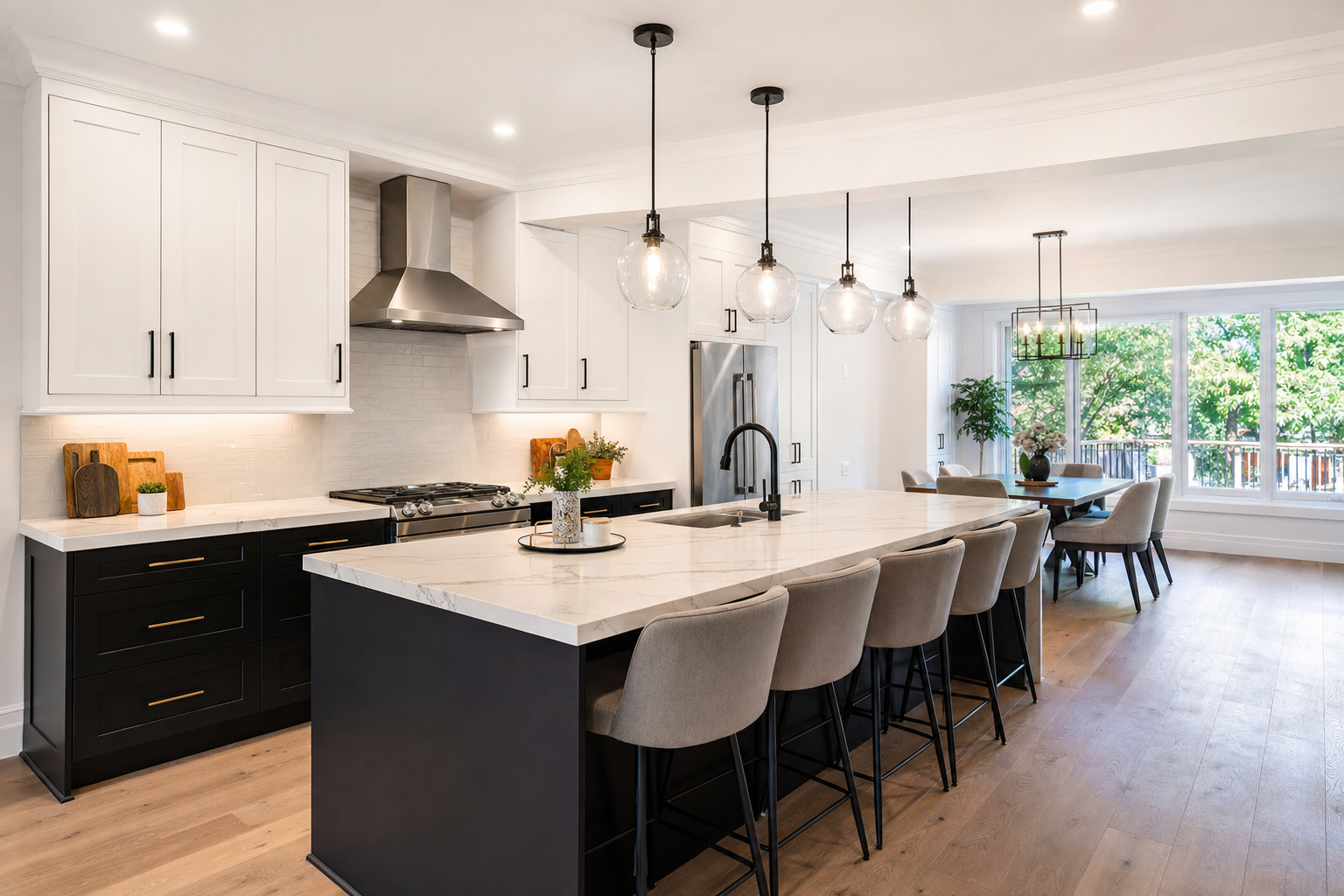
Are home renovations tax deductible in Canada? Most general renovations are not tax deductible, but specific federal and provincial tax credits can significantly reduce your renovation costs if you meet eligibility criteria. For GTA homeowners planning accessibility upgrades, multigenerational home modifications, or substantial renovations, understanding available tax credits and proper claiming procedures can mean thousands of dollars in tax savings.
This guide covers every federal and Ontario home renovation tax credit available in 2026, step-by-step CRA form instructions, documentation requirements, and common audit triggers. You’ll learn exactly which renovations qualify, how to claim them correctly, and what mistakes to avoid when dealing with the Canada Revenue Agency.
Whether you’re planning a bathroom accessibility upgrade, a basement apartment for aging parents, or a comprehensive home renovation, understanding the tax implications before you start can save you considerable money and documentation headaches later.
Quick Answer
Most home renovations are not tax deductible in Canada, but specific tax credits exist for accessibility modifications, multigenerational home renovations, and substantial renovations. You claim these through designated CRA forms when filing your T1 return, not as direct deductions from income.
Key Takeaways
- Understand that tax credits differ from deductions in how they reduce taxes
- Verify your renovation qualifies before starting work to preserve credit eligibility
- Keep detailed receipts, contracts, and permits for every qualifying renovation expense
- Expect CRA to require professional certification for accessibility and medical-related claims
- Budget for permit costs and licensed contractor fees that protect credit claims
- Schedule major renovations strategically around tax year end for optimal timing
Are Home Renovations Tax Deductible in Canada?
The short answer is no, most home renovations are not tax deductible in Canada. Unlike some business expenses or rental property improvements, you cannot simply deduct your kitchen or bathroom renovation costs from your taxable income.
The Canadian tax system offers specific tax credits for certain types of renovations, which work differently than deductions. A tax deduction reduces your taxable income, while a tax credit directly reduces the tax you owe. In many cases, credits provide better value.
The federal government and some provinces have introduced targeted home renovation tax credits to encourage specific types of improvements: making homes accessible for seniors and people with disabilities, creating multigenerational living spaces, and supporting substantial renovations that increase housing supply.
Federal Home Renovation Tax Credits Available in 2026
The federal government currently offers two primary renovation tax credits for Canadian homeowners. Both have specific eligibility requirements and maximum claim amounts that significantly impact your potential savings.
Home Accessibility Tax Credit (HATC)
The Home Accessibility Tax Credit provides a 15% non-refundable tax credit on up to $20,000 of eligible expenses per calendar year. This means a maximum annual credit of $3,000 per qualifying individual.
To qualify, the renovation must allow a qualifying individual to gain access to their home, be mobile within it, or reduce the risk of harm within the dwelling. The qualifying individual must be either 65 years or older, or eligible for the Disability Tax Credit.
Eligible renovations include wheelchair ramps, walk-in bathtubs, grab bars and handrails, accessible bathroom fixtures, stair lifts and elevators, widening doorways and hallways, and lowering kitchen cabinets and countertops.
Multigenerational Home Renovation Tax Credit
This credit provides a 15% non-refundable credit on up to $50,000 of eligible expenses, meaning a maximum credit of $7,500 per qualifying renovation.
The renovation must create a secondary unit that allows a qualifying individual to live with a qualifying relation. The secondary unit must include private access, a kitchen, bathroom, and sleeping area. The qualifying individual must be either 65 years or older, or eligible for the Disability Tax Credit, and must be a family member of the claimant.
This credit specifically targets basement apartment conversions where families want aging parents or adult children with disabilities to live independently within the family home.
When planning accessibility renovations for HATC claims, get medical documentation first. We’ve seen GTA homeowners complete entire bathroom modifications only to learn their condition didn’t qualify for the Disability Tax Credit. Verify eligibility with CRA before breaking ground, not after invoices are paid.
Ontario Home Renovation Tax Credits and Rebates
Ontario doesn’t currently offer a general home renovation tax credit, but the GST/HST New Housing Rebate program for substantial renovations provides significant savings for major projects.
GST/HST New Housing Rebate for Substantial Renovations
When your renovation is extensive enough to qualify as a substantial renovation under federal tax law, you may be eligible for a GST/HST rebate similar to what new home buyers receive.
A substantial renovation means you’ve renovated or altered a building to such an extent that all or substantially all of the building has been removed or replaced. The CRA generally interprets “substantially all” as 90% or more.
Eligible homeowners can recover up to 36% of the federal portion of the HST paid on the renovation, up to a maximum rebate of $6,300. Ontario’s portion provides an additional rebate of up to 75% of the provincial HST, maximum $24,000, for homes valued under $400,000 after renovation.
Document the state of your home before and during substantial renovations with dated photos showing gutted spaces. CRA auditors examining rebate claims want clear evidence that 90% or more was removed or replaced. Without visual proof, even qualifying renovations can face rebate denials during review.
How to Claim Home Renovation Tax Credits
Claiming renovation tax credits requires completing specific sections of your T1 return and, in some cases, additional forms. The process varies depending on which credit you’re claiming.
Claiming the Home Accessibility Tax Credit
The HATC is claimed on Line 31285 of your T1 return. Total all eligible expenses from receipts and invoices. Only amounts paid to contractors, suppliers, and professionals for qualifying work count. Your own labor doesn’t qualify, nor do DIY material costs for work you performed yourself. Keep all supporting documentation for six years.
Claiming the Multigenerational Home Renovation Tax Credit
This credit is claimed on Line 31270 of your T1 return. You must demonstrate the secondary unit includes all required elements: private entrance, kitchen with cooking and refrigeration, bathroom with toilet and bath or shower, and sleeping area. Keep copies of building permits, contractor invoices detailing which work related to the secondary suite specifically, and occupancy permits or final inspection reports.
Claiming the GST/HST New Housing Rebate
This rebate requires Form GST191-WS and must be filed within two years of substantial completion. The form requires detailed information about the property address, renovation completion date, fair market value after renovation, and total HST paid on the project. You must move into the home as your primary residence within one year of substantial completion.
Ready to start your renovation?
Get a free, no-obligation quote from Mostafa Khorsandnia and the Reformo team. Licensed, certified, and insured for projects across the GTA.
Real Tax Savings Examples
Understanding potential savings in dollar terms helps you evaluate whether pursuing tax credits makes financial sense for your project. Here are realistic scenarios based on typical GTA renovation costs and credit eligibility.
| Renovation Type | Total Cost | Eligible Expenses | Credit/Rebate | Net Savings |
|---|---|---|---|---|
| Accessible Bathroom (HATC) | $28,000 | $18,000 | $2,700 | 9.6% of total cost |
| Walk-in Shower + Grab Bars (HATC) | $15,000 | $15,000 | $2,250 | 15% of total cost |
| Basement Suite (Multigenerational) | $85,000 | $50,000 | $7,500 | 8.8% of total cost |
| Whole Home Gut + Rebuild (Substantial) | $250,000 | $250,000 | $30,300 | 12.1% of total cost |
| Kitchen + Main Floor Reno | $75,000 | $0 | $0 | No credit available |
The accessible bathroom example shows a common scenario where $18,000 qualifies for HATC. Items like the vanity cabinet and some tile work don’t qualify because they’re standard finishes, not accessibility modifications. The walk-in tub, grab bars, barrier-free shower, and related installation qualify fully, generating a $2,700 credit.
The whole home renovation demonstrates substantial renovation rebate potential. At $250,000 in renovation costs with 13% HST, the federal GST rebate returns $6,300, and the Ontario rebate returns approximately $24,000, totaling $30,300 in savings.
Permits and Building Code Compliance
Building permits and Ontario Building Code compliance are not just regulatory requirements, they’re essential documentation for protecting your tax credit claims during CRA audits.
When GTA Renovations Require Permits
In Toronto, Vaughan, Mississauga, Richmond Hill, and Thornhill, building permits are required for structural work, plumbing and electrical modifications, additions, and any work that affects the building envelope. This includes most accessibility renovations and all substantial renovations.
Installing a walk-in bathtub requires a plumbing permit. Creating a basement apartment needs building, plumbing, and electrical permits plus zoning approval for a secondary suite. Removing or modifying a load-bearing wall requires a structural permit with engineer-stamped drawings. The permit process creates an official record of work performed and costs incurred, while ensuring the work meets building code requirements.
Documentation That Protects Your Credit During Audits
The permit and inspection paper trail provides audit-proof documentation. Building permit applications include detailed scope descriptions and cost estimates. Contractor invoices tied to permit numbers establish legitimacy. Final inspection approval confirms code compliance.
For substantial renovation rebate claims, this documentation is critical. You need to prove that 90% or more of the home was removed or replaced. Permit applications describing demolition scope, engineering reports for structural work, and inspection records showing multiple systems were replaced build a compelling case. Working with licensed contractors who routinely pull permits ensures this documentation exists.
Common Mistakes and CRA Audit Triggers When Claiming Renovation Credits
The Canada Revenue Agency audits renovation credit claims more frequently than many other tax return items. Understanding common mistakes and audit triggers helps you document properly and avoid delays or denials.
Documentation Failures That Trigger Reviews
Incomplete or missing invoices are the most common problem. The CRA requires detailed contractor invoices showing what work was performed, materials used, labor costs, and dates of service. A receipt showing only a total amount with no description will not support a credit claim. Claiming costs before payment is made causes issues. Tax credits are based on amounts paid during the tax year, not amounts invoiced or work completed. DIY labor claims always fail because you cannot claim the value of your own time or labor.
Misinterpreting Eligible Expenses
Homeowners frequently include related but ineligible costs in their credit calculations. For HATC claims, this includes furniture, appliances, and decorative items even when they’re part of an accessible renovation. The walk-in tub qualifies but decorative tile surrounds do not. The difference comes down to whether the item specifically improves accessibility versus being a general home improvement.
Permit and Code Compliance Red Flags
Claiming credits for work that required but didn’t obtain proper building permits is an audit red flag. Municipal permit records are easily verifiable, and unpermitted work raises questions about whether modifications meet building code requirements. Working with licensed, insured contractors who pull proper permits provides bulletproof documentation and protects your credit claim.
Timing and Payment Errors
Claiming expenses in the wrong tax year triggers reviews. You can only claim amounts actually paid during the calendar year, not work completed or invoiced. Using cash without proper documentation creates verification problems. The CRA requires traceable payment proof such as cancelled checks, credit card statements, or bank transfers linked to specific invoices.
Strategic Timing for Renovation Tax Planning
When you schedule your renovation affects which tax year you can claim credits and how you manage cash flow alongside tax benefits. Planning renovation timing strategically around the tax year end can optimize your credit value and align with your overall tax situation.
End-of-Year Timing Considerations
Since credits are claimed based on amounts paid during the calendar year, December and January payment timing matters. If you’re close to the HATC $20,000 maximum and your project will exceed it, consider whether splitting payments across two years allows you to claim more total credit.
For example, a $35,000 accessibility project completed in November could be structured with $20,000 paid before December 31 and $15,000 paid in January. This allows you to claim the maximum $3,000 credit in each tax year, totaling $5,250 instead of the $3,000 single-year maximum. Don’t artificially manipulate legitimate project payment schedules solely for tax purposes. A reasonable project payment structure that happens to fall across two years is fine.
Multi-Year Project Planning Strategies
Large renovations often happen in phases due to budget constraints or construction logistics. Breaking a project across multiple years can allow multiple years of credit claims, though you need to ensure each phase independently qualifies.
An accessibility renovation might include phase one focusing on the main bathroom and bedroom access, and phase two addressing the kitchen and exterior ramps. If each phase independently improves accessibility for the qualifying individual, you can claim HATC in both years. For substantial renovations, the 90% threshold applies to the total project. You cannot claim the rebate until the entire substantial renovation is complete and you’ve moved into the home as your primary residence.
Income Level and Tax Liability Planning
Since non-refundable credits only benefit you if you have tax liability to offset, consider your expected income in the claiming year. If you’re planning to retire mid-year or expecting reduced income, timing your renovation to claim credits in a higher-income year provides more value. A homeowner with $40,000 taxable income benefits fully from a $3,000 HATC credit, while one with $25,000 income may only benefit partially if their tax liability is lower than the credit amount.
Frequently Asked Questions
Are home renovations tax deductible in Canada?
Most home renovations are not tax deductible in Canada for personal residences. However, specific federal tax credits are available for accessibility modifications (Home Accessibility Tax Credit), multigenerational home renovations, and substantial renovations (GST/HST rebate). These credits directly reduce your tax owing rather than deducting from taxable income.
What types of home renovations qualify for tax credits in Ontario?
In Ontario, renovations that qualify for federal tax credits include accessibility modifications for seniors or individuals with disabilities (HATC), secondary suite creation for multigenerational living, and substantial renovations where 90% or more of the home is gutted and rebuilt. Standard kitchen and bathroom upgrades without accessibility components typically do not qualify for any credits.
What documentation do I need to keep for home renovation tax credits?
Keep detailed contractor invoices showing work description, materials, labor costs, and dates; proof of payment such as cancelled checks or credit card statements; building permits and inspection reports; contracts with scope of work descriptions; and before and after photos for substantial renovations. The CRA requires you to retain all supporting documents for six years after filing.
How do I claim the Home Accessibility Tax Credit on my tax return?
Claim the Home Accessibility Tax Credit on Line 31285 of your T1 return. Calculate total eligible expenses paid during the tax year, up to the $20,000 maximum per qualifying individual. The credit is 15% of eligible expenses, providing up to $3,000 in tax reduction. Enter the qualifying individual’s name, relationship, and total eligible expenses. Keep all receipts and invoices for six years.
Can I claim renovation expenses if I rent out part of my home?
Yes, but different rules apply. If you rent out part of your primary residence, you can claim the rental-use portion of renovation costs according to rental property tax rules. Capital improvements are added to the property’s cost base and depreciated over time. Current repair and maintenance expenses can be deducted in the year incurred. You cannot claim HATC or multigenerational credits for rental portions.
Understanding which home renovations qualify for tax credits in Canada and how to properly claim them can save GTA homeowners thousands of dollars on major projects. While most standard renovations don’t qualify for direct deductions, the federal Home Accessibility Tax Credit, Multigenerational Home Renovation Tax Credit, and GST/HST substantial renovation rebate provide meaningful tax benefits for qualifying work. Success requires careful planning, proper documentation, and working with licensed professionals who understand both construction best practices and CRA requirements.
Reformo Design & Construction brings 15+ years of experience guiding GTA homeowners through tax-smart renovation planning. Our certified team, led by licensed engineer Mostafa Khorsandnia, ensures your project meets Ontario Building Code requirements and includes documentation that supports tax credit claims. From accessible bathroom renovations to comprehensive home rebuilds, we deliver Canadian-standard quality with transparent pricing and on-time completion across Toronto, Vaughan, Richmond Hill, Mississauga, and Thornhill. Ready to start your renovation with proper planning and documentation from day one? Get a free quote and discuss your project with our team today.